Google + Edge? (No, not the browser)
Google's new Coral dev board runs Gemma locally with a dedicated AI accelerator - an early piece of the edge build-out, not a finished product.
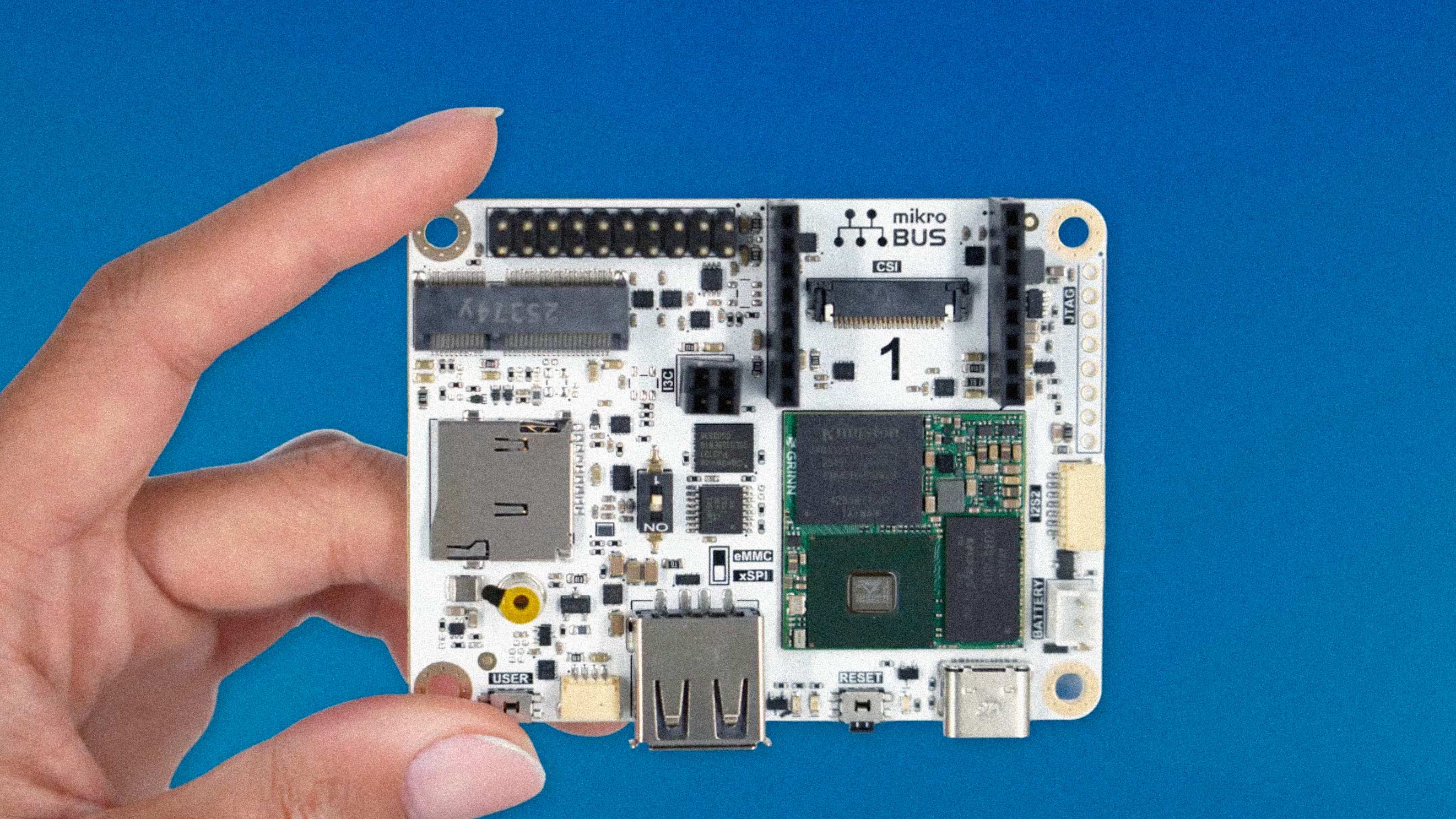
Google released a new Coral dev board, built together with Synaptics. It's a standalone single-board computer (the closest reference point is a Raspberry Pi) with one meaningful difference: a dedicated AI accelerator built in, which lets it run Google's Gemma models locally on the device rather than through the cloud.
It's worth being clear about what this actually is. It isn't a new model, and it isn't a consumer device. It's a hardware-and-software stack for running AI at the edge - in effect, the hardware you'd build a product around. General availability is set for summer 2026, at roughly $50 to $150 a board.
For anyone following this series, the relevance is straightforward. The edge thesis, in part, comes down to moving inference off the providers' balance sheets and onto the device in front of the user. The constraint has so far mainly been hardware - the chips in everyday devices aren't designed to run models of any real use locally. This board is an early step toward closing that gap. A dedicated NPU (think CPU but tailored for AI) handles the AI workload at one to three watts, where a standard Pi would labour through the same task on its CPU alone.
This doesn't mean the build-out has arrived. Capital is still flowing into data centres. But a company of Google's scale releasing edge silicon, along with the tooling to run it, is more than a side experiment. It's an indication of where they're putting their attention.
What it runs is a model called Gemma 3 270M. The name refers to its size, so 270 million parameters, which is small nowadays. This is not a frontier model and not something you'd hold a deeply insightful conversation with. It's a task-specific tool: routing, parsing commands, classification, simple question-answering, basic perception. Categorised correctly, it sits at the small end of Google's open model line - capable, but narrow.
The more useful question is what that enables. The demonstrations gave a reasonable picture: on-device speech translation with no cloud connection, natural-language control of hardware like motors and LEDs, and a vision model tracking objects in real time while feeding a second model generating audio - two models running at once, locally. The pattern across all of it is the same. These are products that need to run one or two models reliably, around the clock, at low cost and low power, without sending data anywhere. Smart cameras, sensor hubs, kiosks, home automation, wearables.
This is also where the broader thesis starts to take a tangible shape. The argument has always been that AI becomes durable when it stops being something you open an app to use and starts being embedded in the things around you. That is one of the more credible routes to getting AI closer to the consumer, and this board is an early piece of the hardware that makes it possible.
It's worth noting that the same focus shows up elsewhere in Google's lineup. Their newer 3.5 model is built around speed rather than topping benchmarks - quicker and now the default behind Search for a very large user base. It's a separate product line, but it points the same way: Google optimising for speed at scale, and for getting AI into the things people already use.
The limits are worth being honest about. A 270M model on two gigabytes of memory and a 1-TOPS accelerator is modest hardware. This is silicon for embedded products, not frontier capability on a small device, and it shouldn't be read as more than that. It's also a dev board first: general availability isn't until the summer, the workflow is prototyping now and production later, and the path from a board on a desk to a shipped product runs through PCB design, enclosures, certification and manufacturing. None of that undermines the signal. But it sizes it correctly, as an early-stage piece of the build-out, not a finished product or a near-term catalyst.
Set against those limits, the reason this still matters is simple: it's a large player putting real resources behind running AI locally, on cheap, low-power hardware. That's the direction the edge thesis has always pointed, and here it is taking a concrete form rather than staying theoretical. Early and modest, but moving.
It's worth knowing the names attached to it. Synaptics is the company building the silicon, and the pivot is showing up in the numbers. Its edge and IoT segment has grown at double digits for several quarters and is now a meaningful share of revenue. Around it sits the rest of the stack: Arm for the processor cores, the module makers shrinking these boards down for production, and the open-hardware designers producing the reference layouts.
None of this is a reason to buy anything tomorrow. It's a reason to start paying attention. By the time the edge build-out is the story everyone is telling, relevant names will already have moved - which is why the work is worth doing now, while it still reads as a quiet hardware release most people scrolled past.