Why the AI Edge Device Build-Out Matters
Why edge matters for the broader AI thesis to actually work - and why now is the time to do the research, not when the stocks are already moving.

The AI edge build-out is, in my view, a necessary part of the broader AI thesis (productivity gains, high ROI, the whole thing) actually working.
The problem when wanting to invest in it is that we're not there yet. The data centre build-out is still running, memory constraints haven't been resolved, and capital is allocated accordingly. Edge isn't the next stage. It's probably not the one after that either.
Still, it's worth understanding now. By the time the market starts pricing it in, the setup will already be crowded. In this series we'll explore what needs to happen leading up to the roll-out, which technology will be vital, and what companies could see similar stock price developments to Micron or SanDisk during their respective cycles. But before we get into any of that, there's one question worth answering first: why does edge matter at all?
The Cloud Isn't Free: Understanding the Cost Problem
Every time you send a message to ChatGPT or pull a response from any consumer AI product, that inference runs through the cloud. That means data centres, server capacity, and the energy to run it - all sitting on the provider's balance sheet. OpenAI, Anthropic, and others are absorbing both the CapEx of building and maintaining that infrastructure and the ongoing cost of running inference at scale. It's a big part of why they keep going back to markets for fresh capital. The current model is expensive, and it gets more expensive as usage grows.
The natural answer to that problem is moving some of that inference onto the edge device itself. Instead of every query routing through the cloud, a meaningful share of it gets processed locally on your phone, your laptop, whatever hardware you're already carrying. The cost burden shifts. The provider isn't running every inference; the device is handling a portion of it (and maybe eventually all of it). That changes the unit economics in a way that starts to make the consumer-facing model actually sustainable.
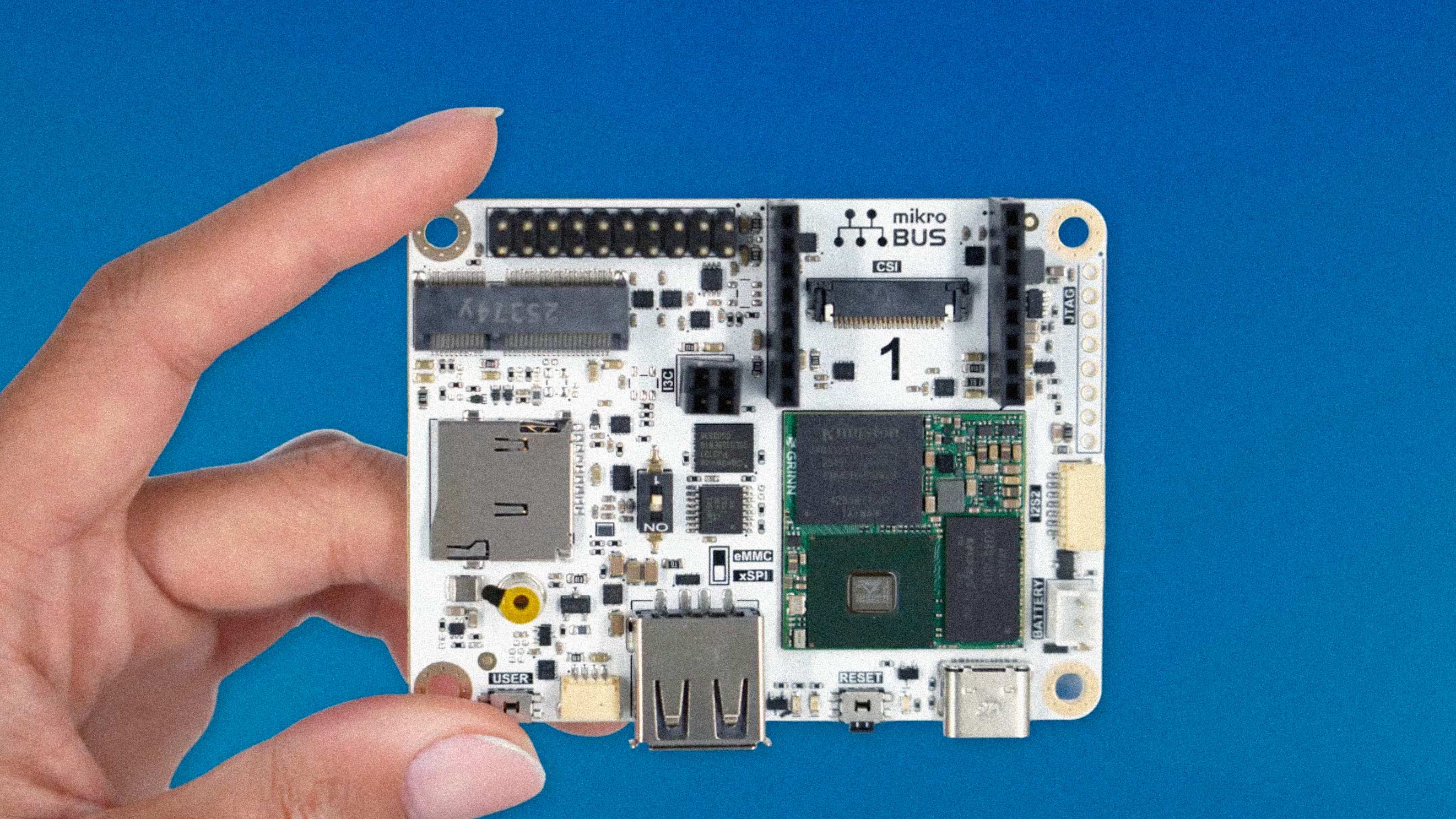
The problem is that the devices we have today can't do this yet. Current phones and laptops don't have the on-device processing power required to run inference of actually value-adding LLMs at the level that makes this viable. That's not a minor technical footnote but the whole reason the edge build-out has to happen. New chip architecture, purpose-built for on-device AI inference, has to come first. And it matters that it does because without a credible path to offloading inference costs, the consumer-facing AI products, which as explored below are integral for the AI thesis to develop, become very difficult to sustain financially.
The clearest parallel for this kind of thinking: xAI was reportedly exploring the use of Tesla hardware for training of xAI's 'human emulators' (designed to perform any task a human can do on a computer). You build hardware with a specific capability, and eventually you find the most efficient use of it. The edge thesis is the same idea applied to consumer devices, just at a much larger scale. Once the hardware is there, the economics of running consumer AI change materially. Until it is, the cloud bears the heavy load.
Unlocking Productivity: Why AI Has to Work for Businesses and the People Inside Them
When people talk about AI unlocking productivity, businesses are at the centre of that story.
The Fortune 500s have the budgets, the IT infrastructure, and in many cases already have their own server rooms running models in-house. That tier of business will figure it out. But a large share of any economy runs on smaller businesses. Companies where the 'server room' is a laptop on someone's desk, where there's no dedicated IT team making infrastructure decisions, and where routing sensitive data through third-party cloud providers creates real friction - particularly in Europe, where GDPR makes data sovereignty not just a preference but a legal requirement. For that tier of company, the current cloud-dependent model is limiting.
On-device inference can change that dynamic. If the processing happens locally, the data doesn't need to leave the device. Privacy concerns are easier to manage, compliance becomes more straightforward, and the barrier to actually integrating AI into day-to-day workflows drops meaningfully. You don't need to trust a cloud provider with your client data if the model is running on the machine in front of you.
But there's a second layer to the productivity question that I have experienced as just as important, and it's less about infrastructure and more about people.
There are two routes. Either the people inside businesses adopt it, integrate it into how they work, and genuinely get more done - or companies start replacing the people who won't with those who will, or with AI directly. The first route is clearly preferable. The second creates unemployment, and at the scale being implied by current AI valuations, it feeds into broader economic strain in ways that are difficult to isolate.
The signals on public acceptance right now aren't particularly encouraging. When Eric Schmidt gave a graduation speech and got booed for talking about AI, it showed how especially the young generation starting their working life thinks about the technology. AI-generated content gets rejected reflexively - music, images, writing - often regardless of quality, simply because of how it was made. That matters for the investment thesis in a fairly direct way. You can build a sophisticated AI infrastructure, but if the people who are supposed to be using it inside businesses are actively resistant to it, the productivity gains get capped. And limited productivity gains means the valuations currently being placed on this infrastructure are harder to justify.
The argument for edge isn't that putting AI on a device magically resolves that cultural resistance. Right now, AI is something you interact with through a browser or an app on someone else's server - a tool you consciously choose to pick up or put down. But I believe when it's embedded in the device you already use every day, genuinely making things faster and easier in ways you notice, the relationship changes. It becomes part of the workflow rather than an addition to it. That's a more durable kind of adoption.
Look, AI on edge devices alone aren't going to flip sentiment on AI overnight. Nonetheless, I think the goal for the AI providers should be to genuinely embed their offering in how people work and live, and for that the pathway probably runs best through devices people already trust, doing things that make their lives visibly easier. The edge build-out isn't just an infrastructure story. It's part of the how-AI-works-in-society story, too.
The Road There: Why Sequencing Matters
Edge isn't next. To be precise about the order of operations: the data centre build-out is still running, memory constraints remain a genuine bottleneck, and the capital allocation reflects that. The industry is still solving for problems that come before edge enters the conversation seriously. Trying to front-run that sequencing is how you end up holding the right idea at the wrong time.
What this series is doing is mapping the full build-out, stage by stage. The memory shortage, the interconnect layer, the cooling requirements. Each of these gets its own treatment, because each is a real constraint that has to be worked through before edge becomes the focus.
Edge is further out. But it's a real destination and it matters economically, structurally, and for the broader question of whether AI delivers on what's currently being priced in. By the time the narrative starts shifting in that direction, the stocks will already be moving. That's not when you want to be doing the research.